ERP Software Development Company in India – Build Smarter, Manage Better
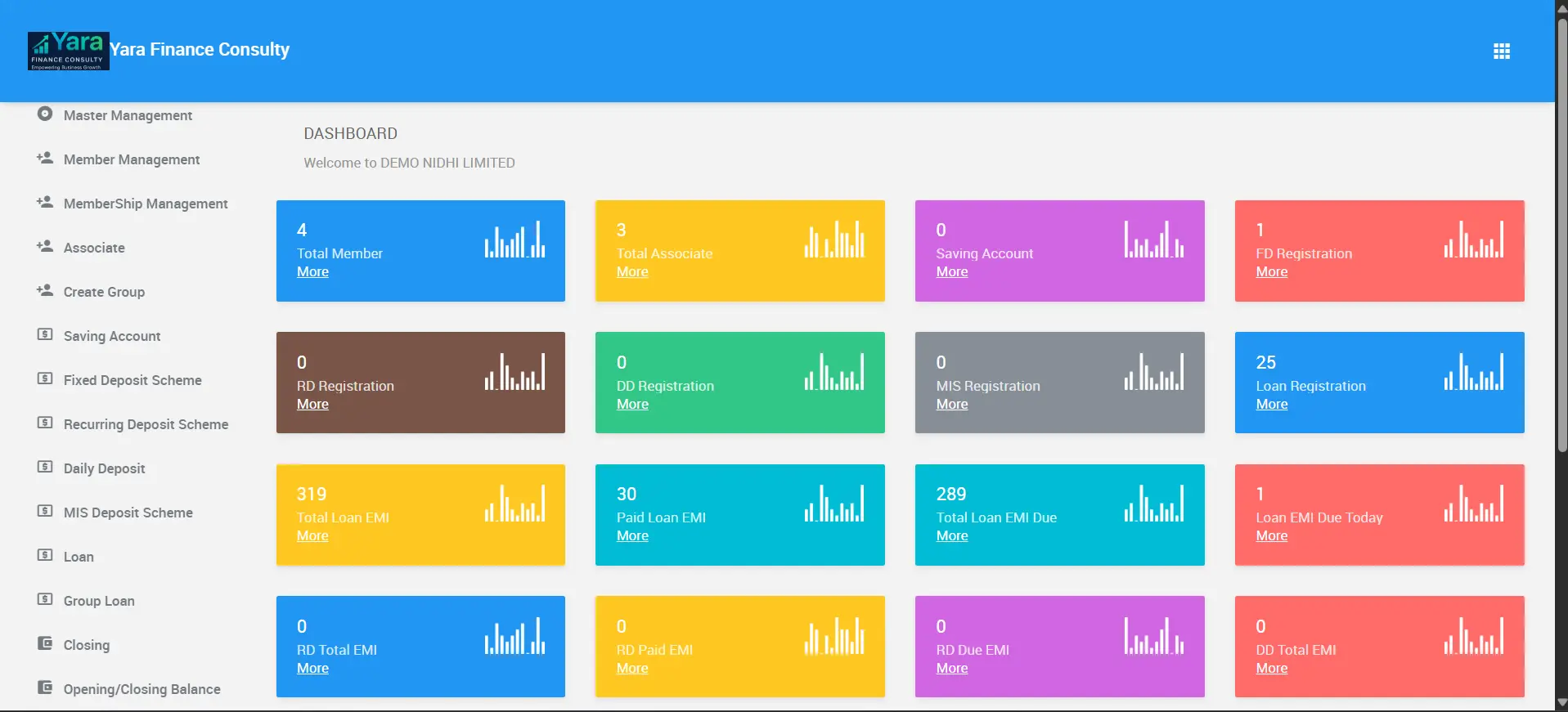
In today’s competitive business environment, managing different departments, employees, customers, inventory, finances, and daily operations through separate systems can become complicated and time-consuming. Businesses need a centralized solution that can connect their operations and provide better visibility into business performance.
This is where ERP software development plays an important role.
An Enterprise Resource Planning (ERP) system brings multiple business processes together on a single platform. From accounting and inventory to HR, sales, purchase, customer management, and reporting, ERP software helps organizations manage their operations in a more structured and efficient way.
If you are looking for an ERP Software Development Company in India, choosing an experienced technology partner can help you build an ERP solution according to your business requirements rather than adjusting your business processes to a generic software.
What Is ERP Software?
ERP software is a centralized business management system designed to connect different departments and operational activities through one platform.
Depending on the business model, an ERP system can include:
- Business Management
- Accounting & Finance
- Sales Management
- Purchase Management
- Inventory Management
- Customer Management
- Employee Management
- Payroll
- Attendance
- Production Management
- Order Management
- Vendor Management
- Expense Management
- Reporting & Analytics
- Document Management
- User & Role Management
Instead of maintaining information in multiple disconnected applications, businesses can manage important data from a centralized ERP system.
Why Businesses Need ERP Software
As a business grows, managing operations manually becomes increasingly difficult. Excel sheets, registers, separate accounting software, messaging applications, and disconnected systems can create data duplication and communication gaps.
A properly designed ERP system can help businesses achieve:
1. Centralized Business Data
All important business information can be managed through a centralized database. Authorized users can access the information they need according to their roles and permissions.
2. Better Department Coordination
ERP software connects departments such as sales, purchase, inventory, accounts, HR, and management. This can reduce unnecessary communication gaps between teams.
3. Faster Business Operations
Automating repetitive activities can save employee time and reduce manual work.
4. Real-Time Reports
Management can view important business reports through dashboards and reporting modules, helping them understand current operational activity.
5. Improved Data Accuracy
Centralized data entry and automated calculations can reduce errors that commonly occur with manual processes.
6. Better Customer Management
Customer information, enquiries, orders, transactions, follow-ups, and related activities can be organized within the ERP system.
Custom ERP Software vs Ready-Made ERP Software
Businesses often have different operational requirements. A manufacturing company, distributor, school, hospital, real estate company, and service provider may all require different workflows.
Ready-Made ERP Software
Ready-made ERP software generally provides predefined modules and workflows.
It may be suitable when:
- Business processes are standard
- Required features are already available
- Limited customization is required
- Quick implementation is a priority
Custom ERP Software
Custom ERP software is developed around the organization's specific requirements.
It can be useful when a business requires:
- Customized workflows
- Industry-specific modules
- Custom reports
- Unique approval processes
- Third-party integrations
- Custom user roles
- Mobile applications
- API integrations
- Business-specific automation
For businesses with unique operational processes, custom ERP development can provide greater flexibility.
ERP Software Development Services in India
A professional ERP software development company can provide complete development services, starting from business requirement analysis and continuing through development, testing, deployment, and maintenance.
Typical services include:
Custom ERP Development
Development of ERP software according to the company's business model, processes, departments, and operational requirements.
ERP Web Application Development
Browser-based ERP systems that can be accessed through computers, laptops, and other supported devices.
ERP Mobile App Development
Mobile applications can provide employees, managers, sales teams, delivery teams, or customers with access to selected ERP functions.
ERP Module Development
Individual modules can be developed according to business requirements.
ERP API Integration
ERP software can be integrated with third-party services such as payment gateways, SMS services, email systems, accounting platforms, e-commerce platforms, and other business applications.
ERP Maintenance & Support
Ongoing technical support, security updates, bug fixing, performance optimization, and feature enhancements can help keep an ERP system reliable as the business grows.
Important ERP Software Modules
The modules required for an ERP system depend on the business. However, some commonly used modules include:
1. Admin Dashboard
The admin dashboard provides management with an overview of business activities.
It may display:
- Total sales
- Orders
- Purchases
- Expenses
- Inventory
- Customers
- Employees
- Revenue
- Pending activities
- Important alerts
2. HR & Employee Management
The HR module can manage employee-related information such as:
- Employee profiles
- Departments
- Designations
- Attendance
- Leave
- Payroll
- Documents
- Employee reports
3. Inventory Management
Inventory management helps businesses monitor:
- Products
- Stock levels
- Stock movement
- Warehouses
- Categories
- Units
- Stock adjustments
- Low-stock alerts
4. Sales Management
The sales module can manage:
- Leads
- Customers
- Quotations
- Sales orders
- Invoices
- Payments
- Sales reports
5. Purchase Management
The purchase module can include:
- Suppliers
- Purchase requests
- Purchase orders
- Purchase invoices
- Payments
- Purchase reports
6. Accounting & Finance
Depending on requirements, an ERP can include:
- Income
- Expenses
- Receivables
- Payables
- Transactions
- Financial reports
- Tax-related records
- Payment tracking
7. CRM
A CRM module can help businesses manage:
- Leads
- Enquiries
- Customer profiles
- Follow-ups
- Sales pipelines
- Communication history
8. Reports & Analytics
Management reports can provide information about sales, purchases, inventory, employees, customers, finances, and other operational activities.
Industry-Specific ERP Software Development
A major advantage of custom ERP development is the ability to design software around a particular industry.
ERP solutions can be developed for:
- Manufacturing Companies
- Distributors
- Wholesalers
- Retail Businesses
- Real Estate Companies
- Educational Institutions
- Hospitals & Healthcare Organizations
- Service Companies
- Logistics Businesses
- Trading Companies
- Finance & Microfinance Businesses
- Construction Companies
- E-Commerce Businesses
Each industry can have its own workflows, permissions, reports, and business rules.
Key Features of Modern ERP Software
A modern ERP system can include several features designed to improve usability, security, and business efficiency.
Role-Based Access
Different users can receive different permissions according to their responsibilities.
Multi-Branch Management
Businesses operating from multiple locations can manage branches through a centralized system.
Multi-User System
Multiple authorized employees can work simultaneously according to their assigned permissions.
Dashboard & Analytics
Management can view important business information through dashboards and reports.
Notifications
The system can provide alerts for important events such as pending approvals, low stock, payments, tasks, or other business activities.
Document Management
Business documents can be stored and organized digitally according to the organization's requirements.
API Integration
ERP systems can communicate with other applications through APIs.
Mobile-Friendly Interface
A responsive interface allows users to access important ERP functions from different screen sizes.
How ERP Software Can Help Business Growth
ERP software is not simply a data-entry application. A properly planned ERP system can become an important part of a company's operational infrastructure.
It can help businesses:
Reduce manual work → Improve data organization → Connect departments → Automate processes → Generate reports → Improve operational visibility
The exact benefits depend on how the ERP is designed and implemented.
Why Choose VSHINE Technologies for ERP Software Development?
VSHINE Technologies provides custom software development services for businesses looking to digitize and manage their operations through technology.
For ERP projects, the development approach can be based on the client's business processes, required modules, user roles, reports, integrations, and future expansion requirements.
VSHINE Technologies can develop solutions covering areas such as:
- Custom ERP Software
- Business Management Software
- Inventory Management
- HR & Payroll
- Sales & Purchase Management
- CRM
- Accounting & Finance
- Reporting & Analytics
- Multi-Branch Management
- Custom API Integration
- Web-Based ERP Applications
- Mobile ERP Solutions
The objective is to develop software that supports the actual workflow of the business rather than forcing the business to follow an unnecessarily rigid system.
ERP Software Development Process
A structured development process can make an ERP project easier to manage.
Step 1: Requirement Analysis
The development team studies the company's departments, workflow, users, challenges, and required features.
Step 2: ERP Planning
Modules, user roles, database structure, integrations, reports, and system architecture are planned.
Step 3: UI/UX Design
Dashboard and application interfaces are designed for different types of users.
Step 4: Development
The required ERP modules and business logic are developed.
Step 5: Testing
The application is tested for functionality, security, performance, usability, and business rules.
Step 6: Deployment
The ERP application is deployed on the selected hosting or server environment.
Step 7: Training & Support
Users can be trained on the system, followed by maintenance and technical support as required.
How to Select an ERP Software Development Company in India
Before selecting a development company, businesses should evaluate several practical factors:
Check Development Experience
Review the company's experience in custom software and ERP development.
Understand the Development Process
Ask how requirements, design, development, testing, deployment, and support will be handled.
Evaluate Customization Capability
Make sure the company can develop features according to your actual business workflow.
Discuss Security
Ask about authentication, authorization, data protection, backups, and server security.
Ask About Scalability
The ERP should be capable of supporting additional users, branches, modules, and transactions as the business grows.
Clarify Maintenance & Support
Understand how post-launch bug fixing, upgrades, and future development will be handled.
Final Thoughts
An ERP system can bring different areas of a business together on a centralized platform and provide better control over daily operations, data, users, and reporting.
For organizations with unique processes, custom ERP software development can provide the flexibility to create modules and workflows according to specific business requirements.
If you are searching for an ERP Software Development Company in India, VSHINE Technologies can help you plan and develop a customized ERP solution based on your business requirements.
Have an ERP software idea? Start with your business requirements, identify the essential modules, and build the system around your actual workflow.
;