School Management Software Development Company in India – Smart Solutions for Modern Schools
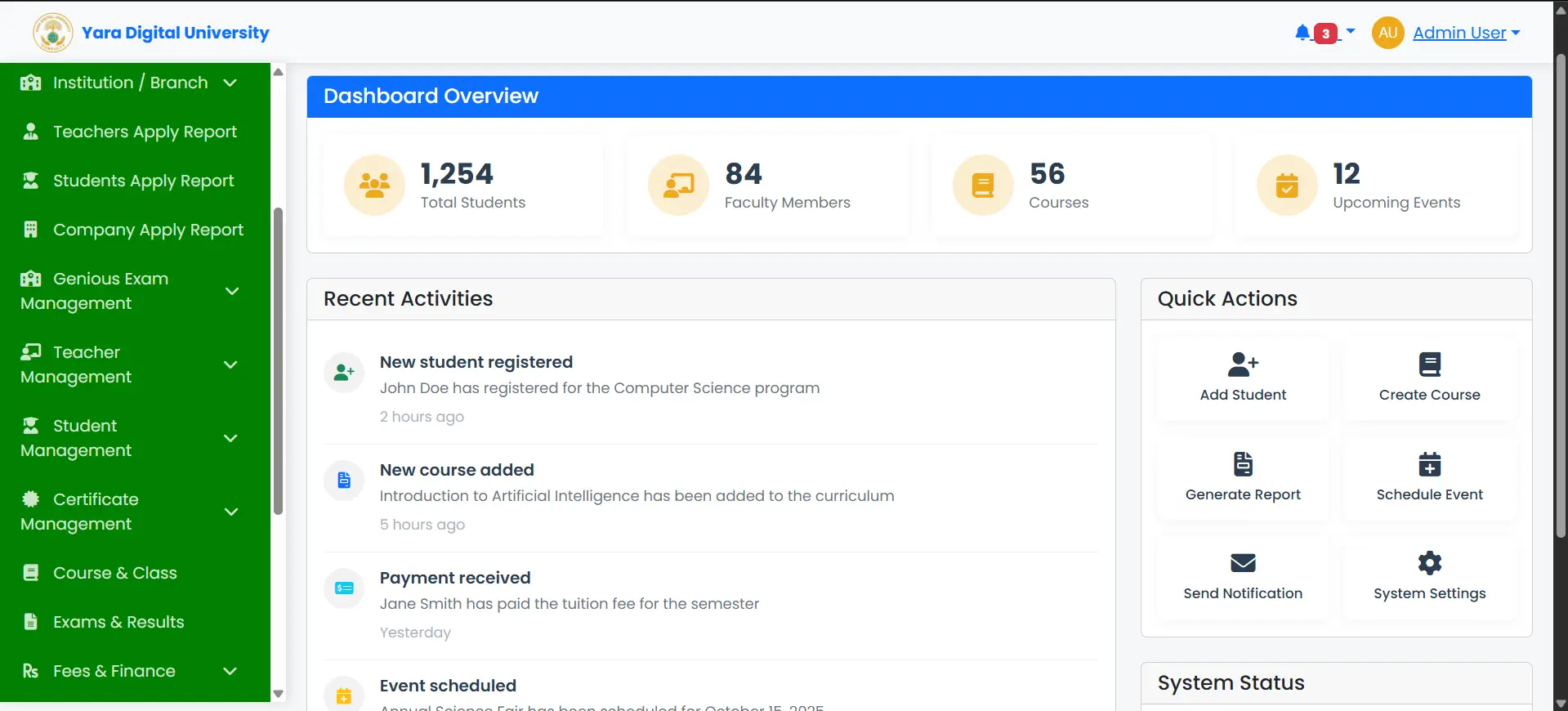
Managing a school involves much more than teaching and learning. Schools need to handle student admissions, attendance, examinations, fees, teachers, parents, transportation, communication, reports, and administrative activities every day.
Managing all these activities manually can consume valuable time and may make it difficult to maintain accurate records.
A School Management Software provides a centralized digital platform through which schools can manage their academic and administrative operations more efficiently.
If you are searching for a School Management Software Development Company in India, a custom software solution can be designed according to your school's specific workflow, requirements, user roles, and management processes.
What Is School Management Software?
School Management Software is a digital system designed to manage and automate different academic and administrative activities of a school.
Instead of maintaining separate registers, spreadsheets, and disconnected applications, a school can manage important information through one centralized platform.
A school management system can include modules such as:
- Student Management
- Teacher Management
- Admission Management
- Attendance Management
- Fee Management
- Examination Management
- Class & Section Management
- Timetable Management
- Parent Management
- Homework & Assignment
- Library Management
- Transport Management
- Notification & Communication
- Payroll & HR
- Reports & Analytics
The exact modules can be customized according to the school's requirements.
Why Do Schools Need Management Software?
Traditional school management methods often involve paperwork, spreadsheets, and manual data entry. As the number of students and staff increases, managing this information becomes more challenging.
1. Centralized Student Records
Schools can maintain student profiles, admission information, class details, documents, attendance, fee records, examination results, and other relevant information in one place.
2. Easier Attendance Management
Teachers or authorized staff can record student attendance digitally and generate attendance reports when required.
3. Simplified Fee Management
The fee module can help administrators manage fee structures, payments, pending fees, receipts, and collection reports.
4. Better Examination Management
Schools can manage examination schedules, subjects, marks, grades, results, and report cards through a centralized system.
5. Improved Parent Communication
Parents can receive important information regarding attendance, fees, examinations, notices, homework, and other school activities through supported communication channels.
6. Faster Reporting
Management can generate reports related to students, attendance, fees, examinations, staff, and other school activities.
Custom School Management Software Development
Every school may have different policies and workflows. A small private school may have completely different requirements from a large school group operating multiple branches.
This is where custom school management software development can be useful.
A customized system can be designed according to:
- School workflow
- Number of students
- Number of teachers
- Classes and sections
- Fee structure
- Examination pattern
- User roles
- Branch structure
- Reporting requirements
- Parent communication
- Existing software integrations
Important Modules of SchoolManagement Software
1. Student Management Module
The student management module acts as a central record system for students.
It can include:
- Student registration
- Student profile
- Admission number
- Class and section
- Parent information
- Student documents
- Previous academic records
- Student status
- Student reports
2. Admission Management
The admission module can help schools organize the admission process.
Features may include:
- Online admission enquiry
- Admission application
- Student registration
- Document verification
- Admission approval
- Student ID generation
- Class allocation
- Admission reports
3. Teacher Management
School administrators can manage teacher information including:
- Teacher profiles
- Departments
- Subjects
- Classes assigned
- Attendance
- Leave
- Timetable
- Payroll information
4. Attendance Management
Attendance is one of the most frequently used school management functions.
The system can support:
- Daily attendance
- Class-wise attendance
- Student attendance history
- Teacher attendance
- Monthly attendance reports
- Absence records
- Attendance summaries
Depending on requirements, attendance can also be integrated with biometric or other supported systems.
5. Fee Management
A fee management module can help administrators manage:
- Fee structures
- Student fees
- Fee collection
- Pending fees
- Discounts
- Late fees
- Payment records
- Receipts
- Collection reports
Online payment integration can also be added when required.
6. Examination Management
Schools can manage different types of examinations through the examination module.
It may include:
- Examination creation
- Subjects
- Exam schedules
- Marks entry
- Grades
- Result calculation
- Report cards
- Student performance reports
The system can automate calculations according to the school's defined rules.
7. Timetable Management
A digital timetable module can help administrators create and manage:
- Class timetables
- Teacher timetables
- Subject schedules
- Periods
- Rooms
- Weekly schedules
Changes can be updated centrally instead of maintaining multiple physical copies.
8. Parent & Student Portal
A parent/student portal can provide access to selected school information.
Parents may be able to view:
- Attendance
- Fee status
- Examination results
- Homework
- Notices
- Timetable
- School announcements
Access should be controlled according to the school's requirements.
9. Communication & Notification Module
Effective communication is important for schools.
The software can support notifications related to:
- School announcements
- Attendance
- Fee reminders
- Examination schedules
- Results
- Holidays
- Events
- Important notices
Email, SMS, WhatsApp, push notifications, or other communication integrations can be considered based on technical and service requirements.
10. Library Management
A school library module can help manage:
- Books
- Authors
- Categories
- Book issue
- Book return
- Due dates
- Student library records
- Availability
- Library reports
This reduces the need for maintaining separate manual registers.
11. Transport Management
For schools providing transportation services, the system can include:
- Vehicle management
- Driver details
- Route management
- Student route allocation
- Pickup/drop locations
- Transport fees
- Vehicle records
GPS or live tracking integration can be added separately if required.
12. Reports & Analytics
School management needs accurate information for daily administration and planning.
The reporting system can provide reports such as:
- Student reports
- Attendance reports
- Fee collection reports
- Pending fee reports
- Examination reports
- Teacher reports
- Admission reports
- Class-wise reports
- Transport reports
- Library reports
School Management Software for Multiple Branches
School groups with multiple branches may require centralized management.
A multi-branch school management system can allow administrators to manage different branches while maintaining appropriate separation of data and permissions.
Possible features include:
- Branch management
- Branch-wise students
- Branch-wise staff
- Branch-wise fees
- Branch-wise reports
- Central administration
- Role-based access
This can make it easier for management to monitor operations across different locations.
Admin Panel, Teacher Panel & Parent Panel
A modern school management system can provide different interfaces for different users.
Admin Panel
The administrator can manage:
- Students
- Teachers
- Classes
- Fees
- Examinations
- Attendance
- Reports
- Settings
- Users and permissions
Teacher Panel
Teachers can access features relevant to their responsibilities, such as:
- Attendance
- Classes
- Subjects
- Homework
- Marks
- Student information
- Notices
Parent/Student Panel
Parents and students can access selected information such as:
- Attendance
- Fees
- Results
- Homework
- Notices
- Timetable
Role-based access helps ensure that users only see the information relevant to them.
Mobile-Friendly School Management Software
School administrators, teachers, students, and parents increasingly use smart phones for accessing digital services.
Therefore, a modern school management system can be designed with a responsive web interface or dedicated mobile applications.
Depending on requirements, mobile access can provide:
- Attendance
- Fee information
- Results
- Notifications
- Homework
- School notices
- Student information
Benefits of Custom School ERP Software
A well-designed School ERP can provide several operational benefits.
Centralized Data
Important information can be maintained in one system.
Reduced Paperwork
Digital records can reduce dependence on physical registers and documents.
Better Accessibility
Authorized users can access information from supported devices.
Improved Communication
Schools can communicate important information more efficiently.
Automated Calculations
Fee calculations, attendance summaries, marks, grades, and reports can be automated according to defined rules.
Better Management Visibility
Dashboards and reports can help administrators monitor school activities.
Scalable Architecture
A properly planned system can be expanded with additional modules, users, branches, and integrations as requirements grow.
School Management Software Development Company in India
Choosing the right technology partner is an important part of developing a school management system.
VSHINE Technologies provides custom software development services for businesses and organizations that require customized digital solutions.
For school management projects, the software can be planned around the institution's specific requirements, including:
- Student Management
- Admission Management
- Teacher Management
- Attendance
- Fees
- Examination
- Timetable
- Library
- Transport
- Parent Communication
- Reports
- Multi-Branch Management
- Custom Modules
The development approach can be adapted according to the school's size, workflow, user requirements, and future expansion plans.
School Management Software Development Process
A professional development process generally includes the following stages:
Step 1: Requirement Analysis
The development team understands the school's existing workflow, challenges, users, and required modules.
Step 2: System Planning
The database, modules, user roles, permissions, integrations, and system architecture are planned.
Step 3: UI/UX Design
User interfaces are designed for administrators, teachers, students, and parents according to their requirements.
Step 4: Software Development
The selected modules and business logic are developed.
Step 5: Testing
The system is tested for functionality, usability, security, performance, and business rules.
Step 6: Deployment
The software is deployed on the selected hosting or server environment.
Step 7: Training & Support
Users can receive training and technical support after implementation.
How to Choose a School Management Software Development Company?
Before selecting a development company, schools should consider:
Experience in Custom Software Development
Check whether the company has experience developing customized software solutions.
Understanding of School Workflows
The development team should understand admissions, attendance, fees, examinations, staff management, and parent communication requirements.
Customization
Ensure that the system can be modified according to the school's specific requirements.
Security
Student, parent, employee, and financial information should be protected through appropriate authentication, authorization, backups, and security practices.
Scalability
The system should be capable of supporting future growth, additional users, modules, or branches.
Support & Maintenance
Discuss post-launch support, bug fixing, updates, backups, and future enhancements before starting the project.
Why Custom School ERP Can Be Better for Growing Institutions
A growing school may initially require only basic modules such as students, attendance, fees, and examinations.
Later, it may need:
Parent App → Online Fees → Transport → Library → HR & Payroll → Advanced Reports → Multi-Branch Management
A modular custom ERP can allow these capabilities to be added according to future requirements.
This makes the software development process more flexible and helps the school avoid implementing unnecessary features from the beginning.
Final Conclusion
A modern School Management Software can help educational institutions move from manual administration toward a more organized digital workflow.
From student admissions and attendance to fees, examinations, teachers, communication, and reporting, different school operations can be brought together through a centralized platform.
For schools with unique requirements, custom School ERP software development provides the flexibility to build modules, workflows, dashboards, permissions, and reports according to their actual needs.
If you are looking for a School Management Software Development Company in India, VSHINE Technologies can help you plan and develop a customized school management solution designed around your institution's requirements.
Build a Smarter School. Manage Better with Technology.
Website: www.vshinetech.in
;